Neuropsychology Education For Schools
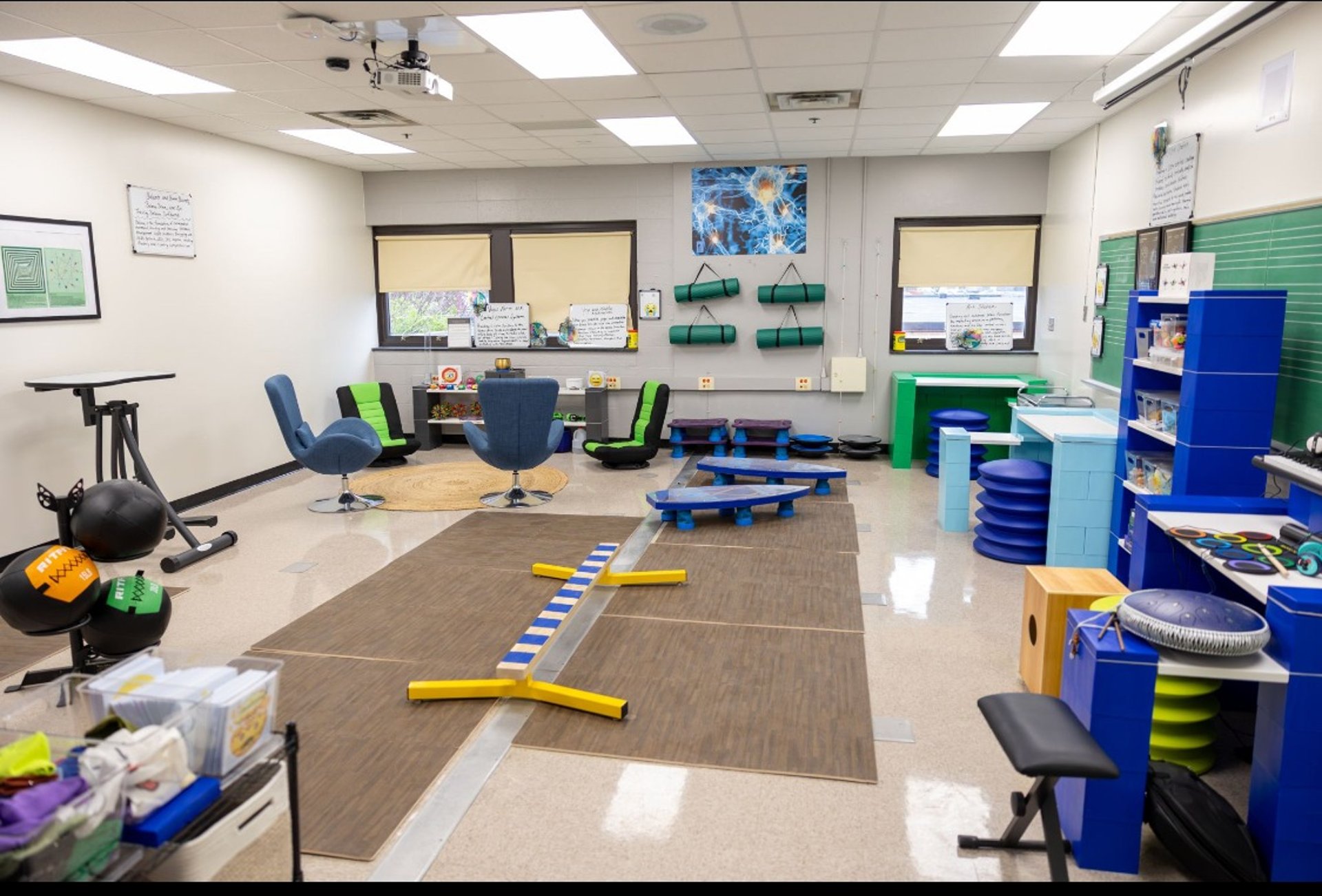
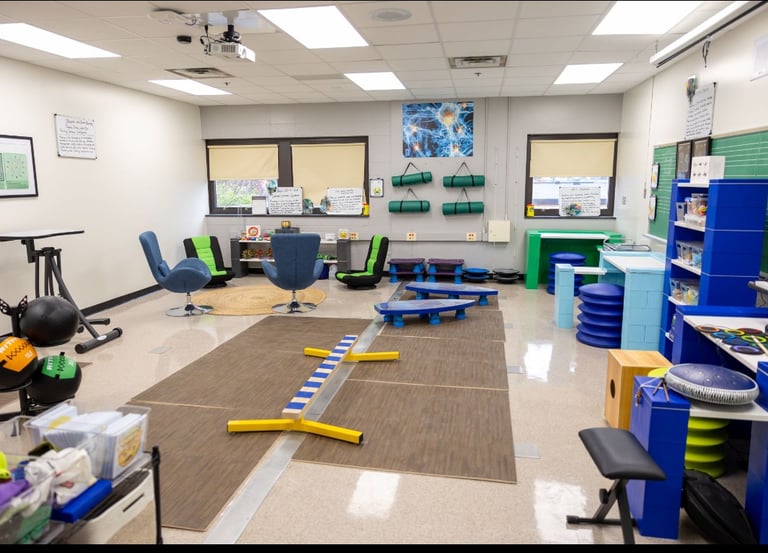
Displayed is a Connection Room Created by Michele
A place where synaptic connections are limitless........


APPLICATION
Neuroscience-Informed Environments for Intervention & Growth
Why This Matters
Lasting change happens through repeated, supported practice. The Neuro-Lab and Connection Rooms are where foundational learning and regulation strategies come together in a purposefully designed environment that reinforces new neural pathways over time.
These rooms are not sensory break spaces. They are neuroscience-informed intervention environments aligned with MTSS Tier 1, 2, and 3 supports.
What These Spaces Do
Reinforce regulation, executive function, and learning access through intentional use
Provide structured opportunities for self-regulation and co-regulation
Support intervention planning with daily student and staff assessment tools
Generate meaningful data for MTSS meetings and special education IEP conferences
The rooms serve as the application layer of the NeuroBalance ecosystem, translating understanding and regulation into observable, measurable growth.
Purposeful Design
Neuro-Lab and Connection Rooms integrate:
Proprioceptive and sensory-motor regulation
Vagus nerve–supportive practices
Cognitive and creative stations (music, art, STEM)
Predictable routines that promote safety, connection, and learning readiness
By aligning professional learning with environmental design, schools create a sustainable, scalable system that supports emotional well-being, behavior, and academic engagement.
The NeuroBalance School Ecosystem unites professional learning, nervous system regulation, and neuroscience-informed environments into a cohesive framework that strengthens student behavior, emotional well-being, and academic achievement.
Our integrated approach builds common understanding, reinforces regulation skills, and creates measurable growth across Tier 1, Tier 2, and Tier 3 supports.
REGULATE →
Nervous System Regulation
"Resetting the Vagus Nerve"
Why This Matters
Understanding the brain is essential—but regulation is what allows that understanding to be accessed in real time. When the nervous system is overwhelmed, learning, behavior, and connection are compromised for both students and adults.
The Resetting the Vagus Nerve series builds directly on the Foundations in Neuropsychology by translating brain science into experiential regulation practices that restore safety, stability, and learning readiness.
What This Work Provides
Practical nervous system regulation strategies that can be used immediately
Tools to reduce chronic stress, emotional escalation, and shutdown
Support for adult co-regulation, recognizing that educator regulation drives student regulation
Increased capacity for emotional resilience and relational connection
This work strengthens the regulation layer of the NeuroBalance ecosystem, ensuring that foundational knowledge can be applied during moments of stress and dysregulation.
Focus of the Series
Participants learn how breath, rhythm, sound, movement, and sensory input influence the vagus nerve and autonomic nervous system—supporting emotional regulation, focus, and recovery from stress.
Regulation is not an add-on; it is the bridge between understanding and application.
TRAIN →
Foundations in Neuropsychology
Professional Learning for Schools
Why This Matters
When educators understand how the brain and nervous system develop, behavior becomes information—not defiance—and learning becomes more accessible. The Foundations in Neuropsychology series builds a shared, neuroscience-informed understanding that strengthens regulation, engagement, and academic success across school systems.
This two-part professional learning series equips school teams with practical, brain-based insight they can apply immediately—without adding new programs or initiatives.
What Schools Gain
A shared language for understanding behavior through a neuroscience lens
Practical strategies to support regulation, attention, and engagement
Increased capacity to respond to challenging behaviors without escalation
Strong alignment with MTSS Tier 1, 2, and 3 supports
This training forms the knowledge base of the NeuroBalance ecosystem—preparing staff to apply regulation strategies and neuroscience-informed environments effectively.
Part 1: Nervous System Foundations for
Learning & Behavior
Sessions 1–4 | 60–90 minutes
Part 1 establishes foundational understanding of how brain development and the nervous system influence behavior, emotional regulation, executive function, and learning readiness—for both students and the adults who support them.
Educators learn:
Why stress and dysregulation interfere with learning and behavior
How co-regulation supports emotional safety and engagement
How memory, motivation, and attention are impacted by nervous system state
Part 2: Applied Neuropsychology for Classrooms & School Systems
Sessions 5–8 | 60–90 minutes
Part 2 builds on the foundation of Part 1 and focuses on application and sustainability. Educators learn how to intentionally apply neuropsychology to instruction, intervention, and whole-school practices.
Educators learn:
Developmentally appropriate executive function support
Neurodivergent brain profiles viewed through a strengths-based lens
Aligning neuroscience with MTSS frameworks and intervention planning
How This Fits the Ecosystem
Foundational Neuropsychology provides the understanding that makes regulation practices effective and allows neuroscience-informed environments (such as Neuro-Lab and Connection Rooms) to produce meaningful, measurable impact.
Together, these elements form the NeuroBalance ecosystem:
understanding the brain
building regulation capacity
applying neuroscience through environment and data
REGULATE
This series builds directly on the foundations, giving staff practical ways to apply neuroscience in real time for better outcomes.
APPLICATION
These neuroscience-aligned environments activate the learning and regulation work into real, observable student growth.
*Programs may be implemented individually or as part of a phased, multi-year ecosystem approach.
Join Our School Neuropsychology Partnership Learning
Stay updated on new training descriptions and registration details.